It is time for taking stock of my servers. My setup has evolved a bit, but not as well planned as I would like it to have. I currently have 4 servers - 5 if you count my Linode/Akamai VPS but only one of them is actual dedicated server hardware.
Servers as of February 2024
Server number 1 is a Raspberry Pi 4B 2 GB running my Home Assistant and Unifi controller. This boots off a 2.5" 250 GB SSD connected via USB.
My second server is a Lenovo Tiny running Proxmox. This is an AMD Ryzen 5 PRO 3400GE based 1L PC with 64 GBs of RAM. Boot disk is an 256 GB Samsung M.2 NVME. This is my 24/7 server which holds my primary files - mainly Documents, Photos and Music. Our data resides in a ZFS mirror consisting from a 2.5" 4 TB SATA HDD and a 3.5" 8 TB external HDD. This is not an ideal solution but there is only one 2.5" internal SSD/HDD bay in this machine due to its minimal size.
The third server is a standard PC with a 4th gen Intel i3. Data storage is a ZFS mirror vdev with 2 x 3 TB and 2 x 4 TB drives combined:. That gives 7 TB total storage space. This also holds some important data as well as some less important data. We have some of our DVDs ripped, so I can re-rip them but i would rather spend that time once more.
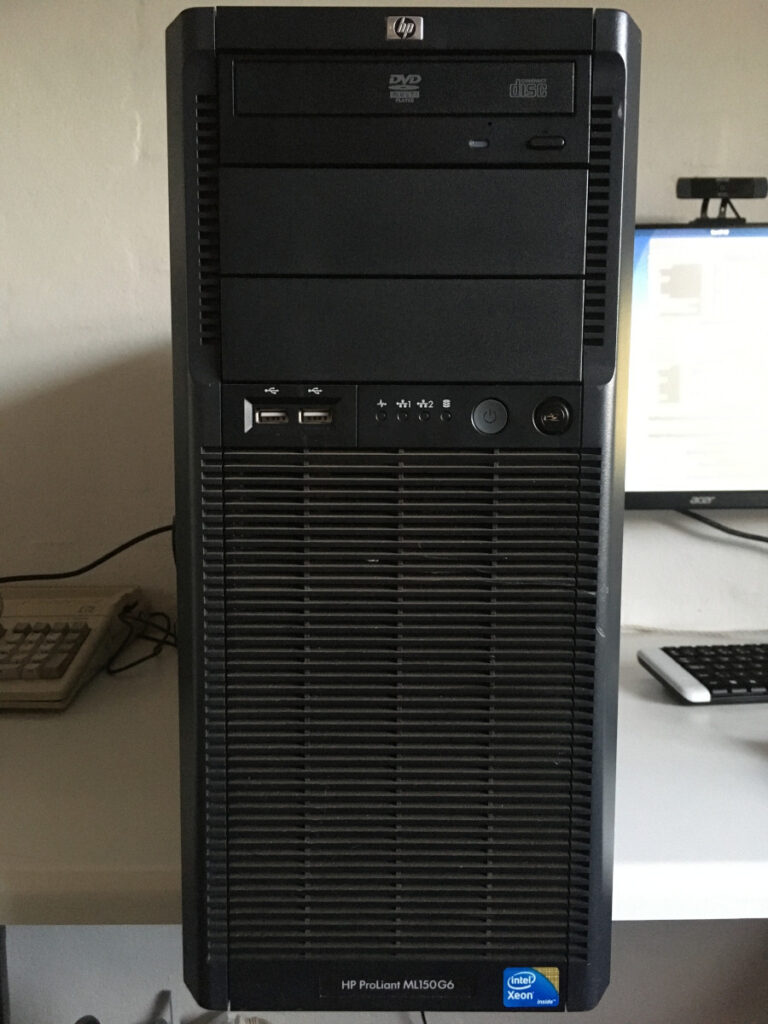
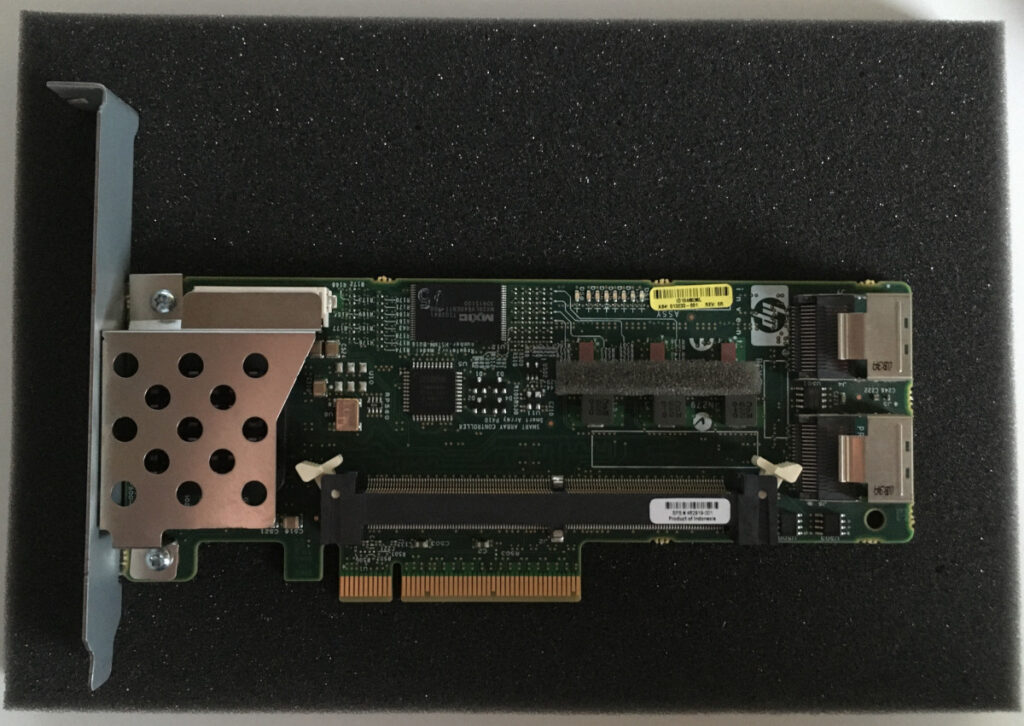
The fourth server is actual server hardware - it is the HP Proliant ML 150 G6. This server has space for 4 hot-swappable 3.5" HDDs. I have a mixture of different drives both 3.5" and 2.5" laptop drives. I am not entirely sure which drives are in the at the moment. We will get back to that in a later post.
And finally I have a Akamai/Linode Virtual Private Server. It is what they call a Nanode - their smallest server with a single (1), shared CPU, 1 GB of memory and 25 GB disk storage. At the moment I have been trying a few different things on this, but nothing permanent. I have a more permanent plan for this in the future - this will be covered in its own post.
Future server setup
The Raspberry Pi Home Assistant server is not likely to change in 2024. Unless I manage to actually get it in a case!
The Lenovo Tiny is likely to be replaced with a refurbished SFF PC instead. This will allow me to hold two 3.5" drives plus 1-3 SSDs. I am going to shuck the external 8 TB drive and replace the 4 TB drive with a 10+ TB drive. That would double the mirror storage.
If you are wondering why I am not just buying a second 8 TB drive as a minimum of 2 TB would be “lost” (unused). The reason is simple - it is an upgrade path. By getting just an 8 TB drive, I would have to change 2 drives to upgrade again. by getting a drive a number larger than the currently largest drive you can expand the storage every time you upgrade.
The reason I am limiting my 24/7 server to just 2 spinning drives is simply power use. Even two large 16+ TB drives use less power combined than 6 or 8 smaller drives.
The Lenovo Tiny has another bottleneck - it just has a single 1 Gbit ethernet NIC. The plan is that when the Tiny is being replaced, it will be a dormant Proxmox that can woken up by Wake-on-LAN, when I need more processing power. The SFF PC will have space for additional NICs.
The 4th Gen Intel server will become a backup server. It will wake up once a day and pull a backup from the future SFF PC by doing a ZFS Send/Receive. This way it does not matter as much how many drives it has as it is only on for a fraction of a day. And it can be planned to a time of day where electricity is (relatively) cheap.
Server retirement
The HP Proliant server is probably going to be retired in the long run. Although it is the most well suited platform as a server it is quite old and not very power efficient. I might keep it as the backup server until I get the SFF desktop server up and running.