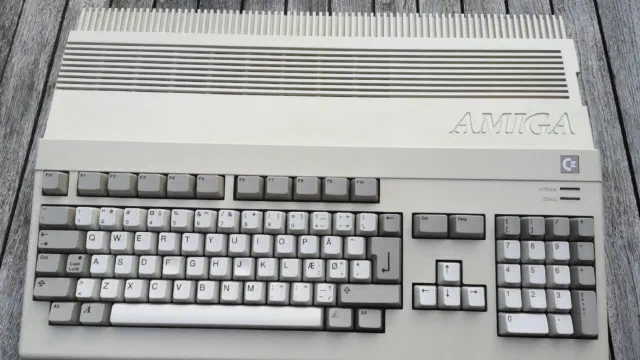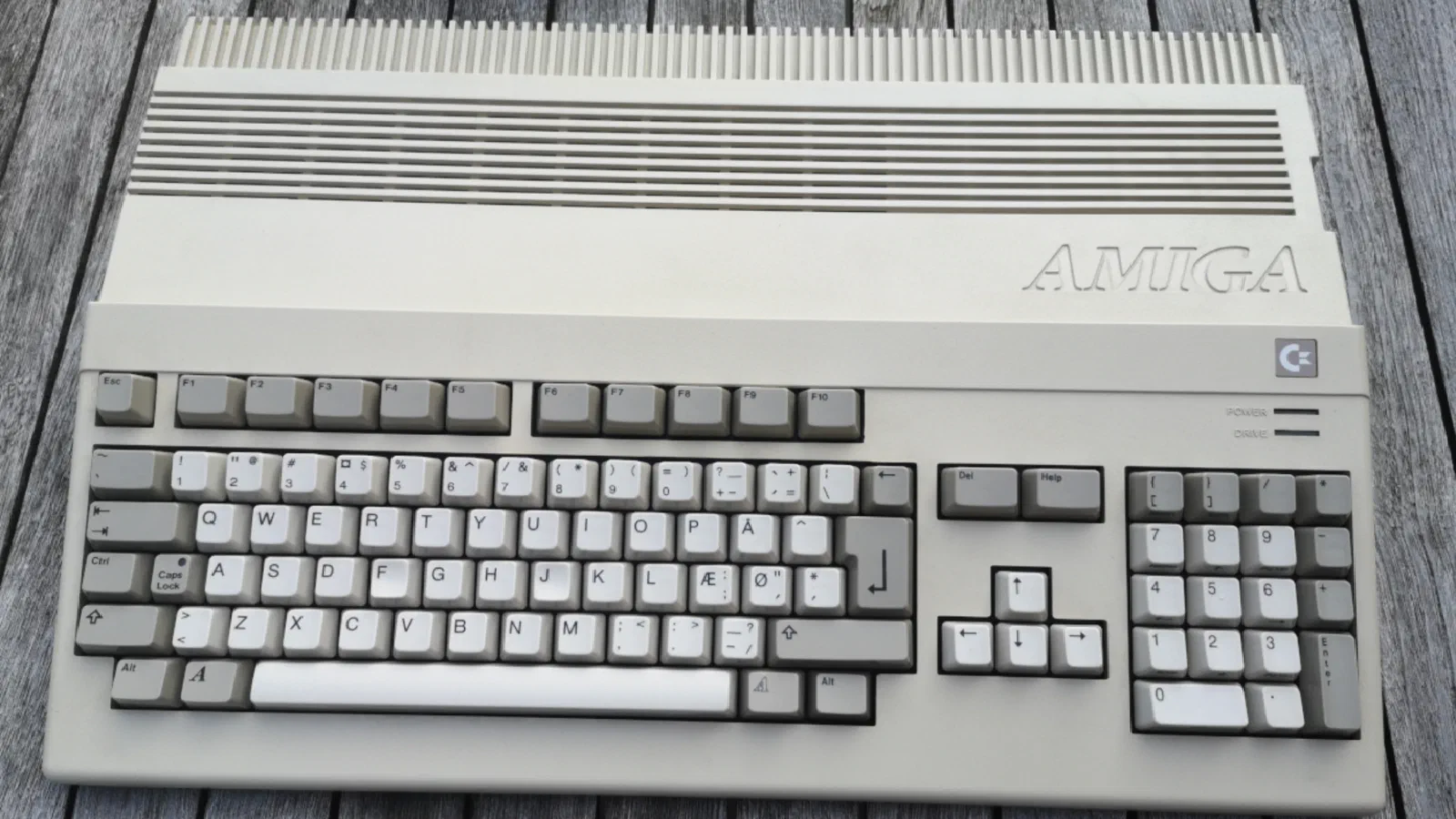
I finally got back into the Commodore Amiga in late May 2019 by purchasing a used Amiga 500. I have yet to set it up permanently but it has been running a few times. I am planning how to set it up physically as well as how my setup will be with regard to software and hardware, etc.
This article was originally posted on my old Amiga site (Amiga Retro Computing)
I also have a few projects related to this Amiga 500, some of which I already have the parts for, others I need to prepare parts - I have the ingredients so to speak, and yet others I need to find the parts - and the funds for those parts…
This is part three of My (personal) Commodore history. You can read the first two parts here: My Commodore history - part one: Commodore 64 and My Commodore history - part two: Commodore Amiga.
The projects I have the parts for, and that I - hopefully soon - will put up articles for are:
- Kickstart ROM switcher
This Kickstart ROM switcher allows you to cycle between up to 3 ROMs by pressing and holding the Commodore-ALT-ALT keys more than three seconds. In addition to the Kickstart 1.3 ROM that was in this Amiga 500, I have a Kickstart 2.04 ROM I will mount in this switcher
- GoTek Floppy emulator
This Amiga has its original (?) floppy drive internally. But I also have a GoTek Floppy Emulator with an OLed screen. The plan is to use this externally.
- DF0/DF1 Boot selector.
This will allow me to make my external (GoTek) drive into DF0: and this be able to boot from that.
The projects I need to prepare parts for are:
- RGB to SCART cable
I have an Amiga 520 TV Modulator to connect the Amiga to a TV either through VHF or through Composite. But either solution does not give the best of pictures. Through the SCART port of most TVs it is possible to connect the RGB signal from the Amiga to the TV with Stereo input. I have the DSUB 23 cables plugs for this but I need to print a shell for the DSUB 23 plug as well as desolder the SCART plug from a SCART to SCART cable and then solder the SCART cable to the DSUB 23 plug.
The projects I need parts for are:
- A harddrive
The Amiga 600, 1200 has built-in IDE ports, the Amiga 500 does not. The Amiga 500 had Harddisk controllers available back in the day but these are SCSI controllers rather than IDE and SCSI harddisks are a lot harder to come by these days. Secondly with an IDE interface, it is possible to buy a Compact Flash to IDE adapter which mean that it is possible to use CF cards instead of a rotating drive. There are current design accelerator cards for the Amiga that has either an IDE port or even a CF adapter built-in
- Network interface
It would be awesome to have some kind of network connection for this Amiga, even if it to the Amiga looks like a dial-up connection to a BBS. There are a few solutions out there to connect your Amiga either through the Serial port - like a dial-up modem - or the parallel port - plipbox.
- AmigaOS 3.1.4
This is the latest version of the AmigaOS, developed and released by Hyperion Entertainment one of the Intellectual Property owners of the Amiga brand and Software.
Unfortunately there seems to be multiple stake holders that feel entitled to the Amiga Brand and IP. I honestly do not have any knowledge to decide who would be best suited to carry forward the Amiga so I will not try to make any comments to that. But currently there are three competing current AmigaOS versions by three different companies AmigaOS 3.1.4, AmigaOS 3.5, AmigaOS 3.9, AmigaOS 3.X, and AmigaOS 4.1.
AmigaOS 3.5 and 3.9 runs on the original Kickstart 3.1 ROMs but require a Motorola 68020, 4 MB of RAM and a CD-ROM drive so they are not a choice for me
AmigaOS 4.1 (and 4.0) are made for the PowerPC processor line rather than the Motorola 68000 family so that is not a choice either.
This leaves the AmigaOS 3.X by Amiga Forever/Cloanto and 3.1.4 by Hyperion Entertainment. To be honest, I am not sure which would be better, so I will have to look more into this. Maybe I will get both.