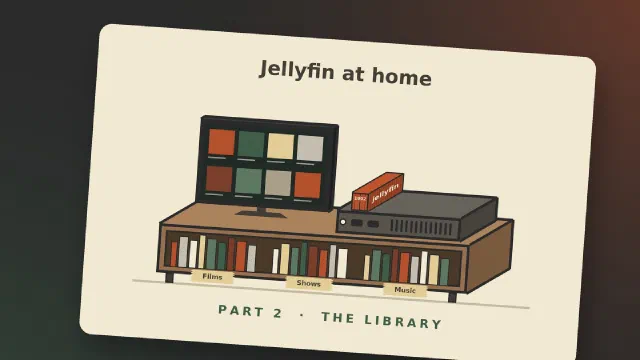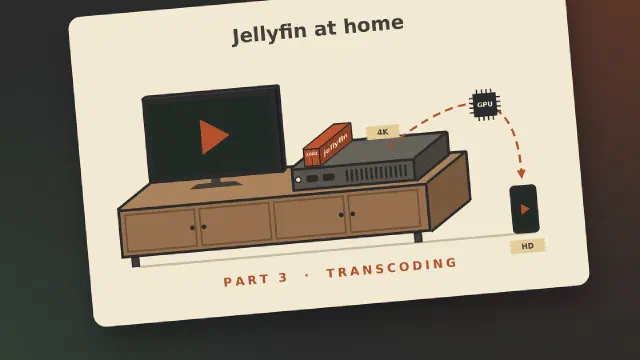
Jellyfin at home · Part 3
Jellyfin hardware transcoding on a Ryzen APU with VA-API in a Proxmox container
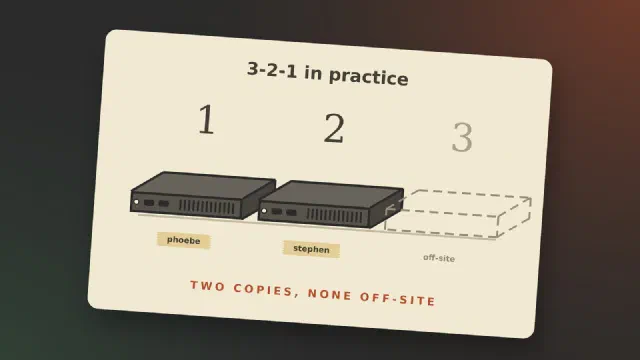
by Jan Holbo RasmussenIn part 1 I left hardware acceleration switched off. Most of the time that doesn’t matter, because most of the time Jellyfin doesn’t convert anything. But when it has to, a 4K HDR film is enough to bring my server to its knees. This part hands the graphics chip in phoebe’s processor to Jellyfin, and measures what changes.
Direct play vs. transcoding
When you press play, Jellyfin first checks whether the client can play the file as it is: the container, the video and audio codecs, the bitrate, and for HDR whether the screen can show it. If it can, the server just sends the file. That’s direct play, and it costs the server almost nothing. If it can’t, Jellyfin transcodes: it decodes the video, changes what needs changing, encodes it again, and sends the result [3]. Which formats a client can take directly differs a lot between a browser, a phone app and a TV app [4].
Read article →